A free browser game about how money works in the UK. Learn interest, saving, credit, tax, mortgages and scams in short illustrated lessons. Battle creatures using what you learned. Weeks later, the questions return. Built for 15 to 18 year olds; anyone 15 or over can play.
THE PROBLEM
UK TEENAGERS AREN'T DISENGAGED FROM MONEY. THEY'RE UNDERSERVED.
Financial education is on the curriculum in all four UK nations. It is not landing, and the stakes arrive at eighteen all at once: student debt, a first payslip, a tenancy deposit and a credit file. Moneywell Town is built for the years before that — prevention, not cure — so the habits are already there when the bills arrive.
80%
want to learn more about money. 53% want to improve their situation but do not know how.
LFBF YOUNG PERSONS' MONEY INDEX 2025/26
9%
say school is where they get most of their money knowledge. 2% say banks. 61% say parents.
LFBF YOUNG PERSONS' MONEY INDEX 2025/26
19%
of 15 to 18 year olds answer all three interest, inflation and risk questions correctly.
LFBF YOUNG PERSONS' MONEY INDEX 2025/26
HOW IT WORKS
LEARN IT. FIGHT IT. GET THE EXPLANATION EITHER WAY.
01 LEARN
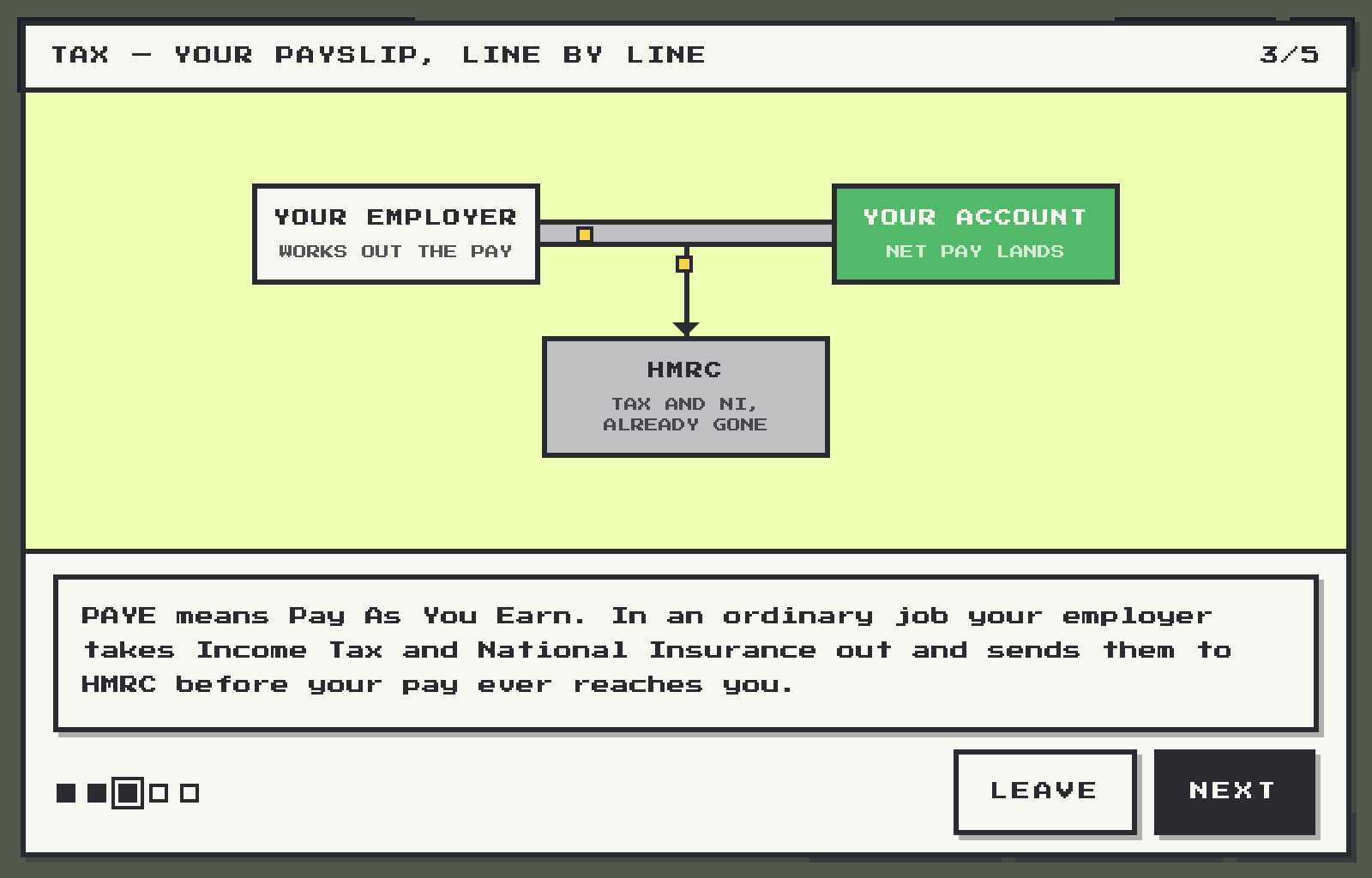
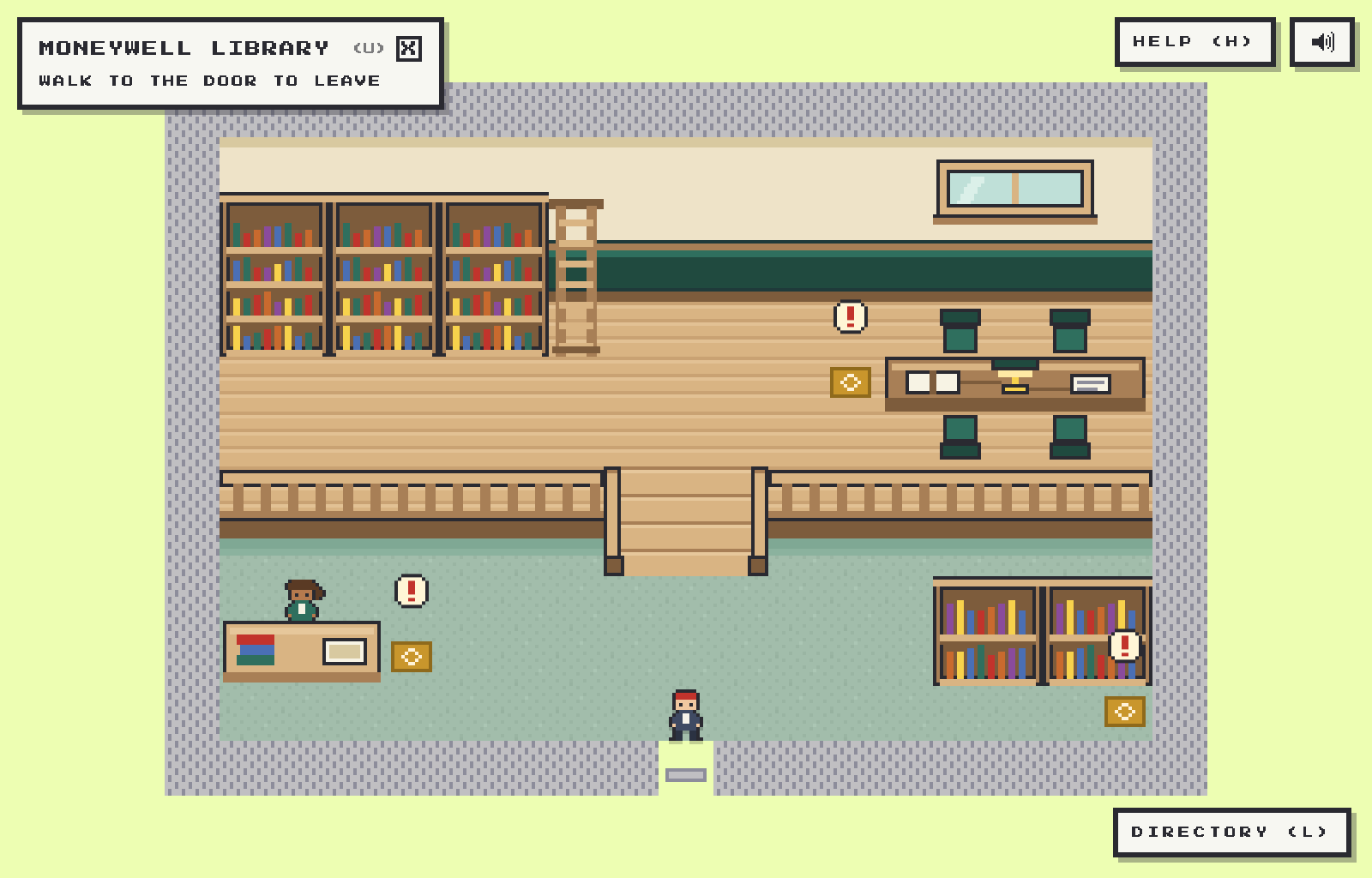
Walk into a town building and talk to someone. A few short pages, plain sentences, UK context. The bank teaches interest, saving, credit and how scams work; the accountants teach tax; the mortgage advisors teach loan-to-value.
02 BATTLE
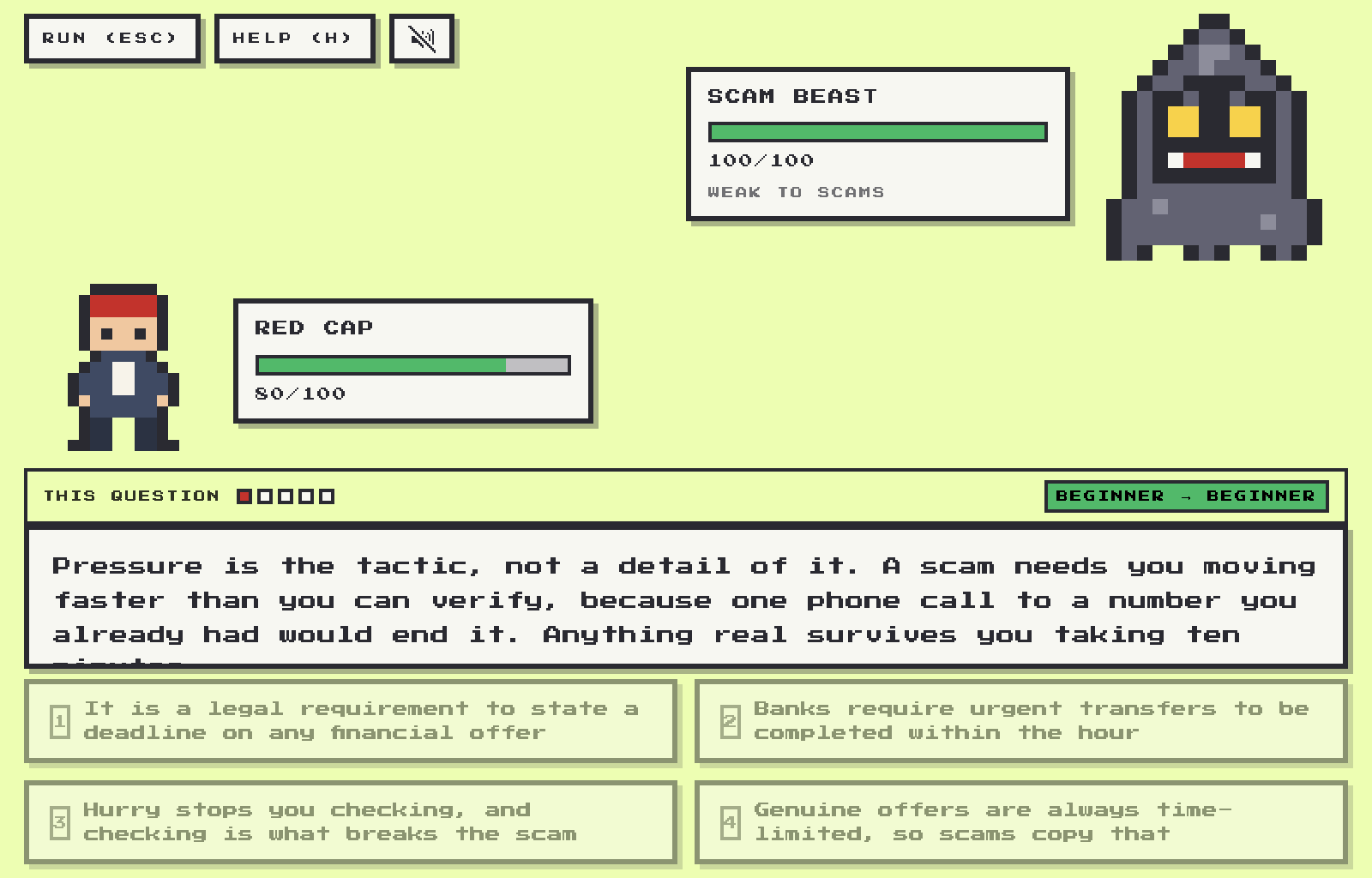
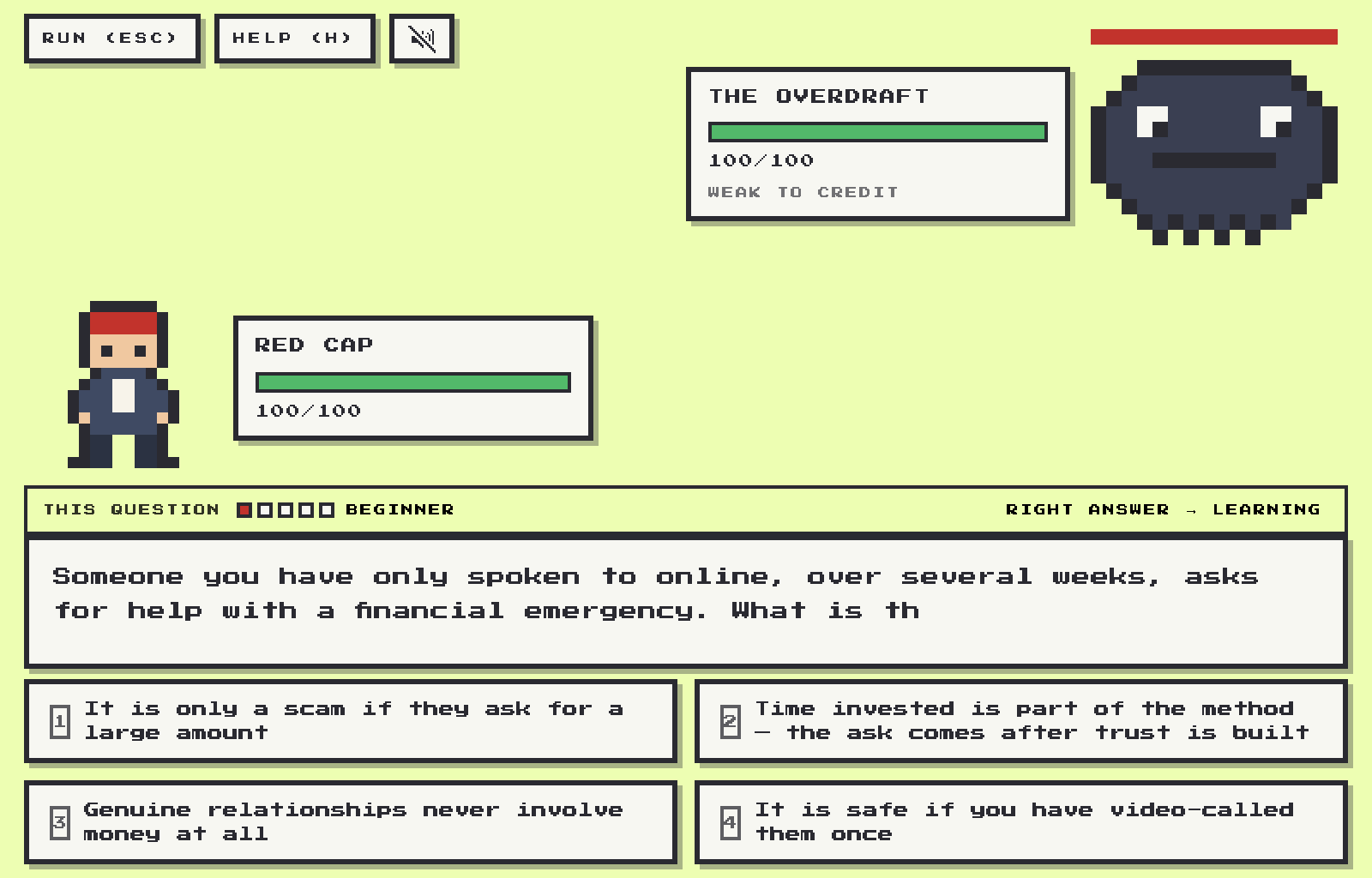
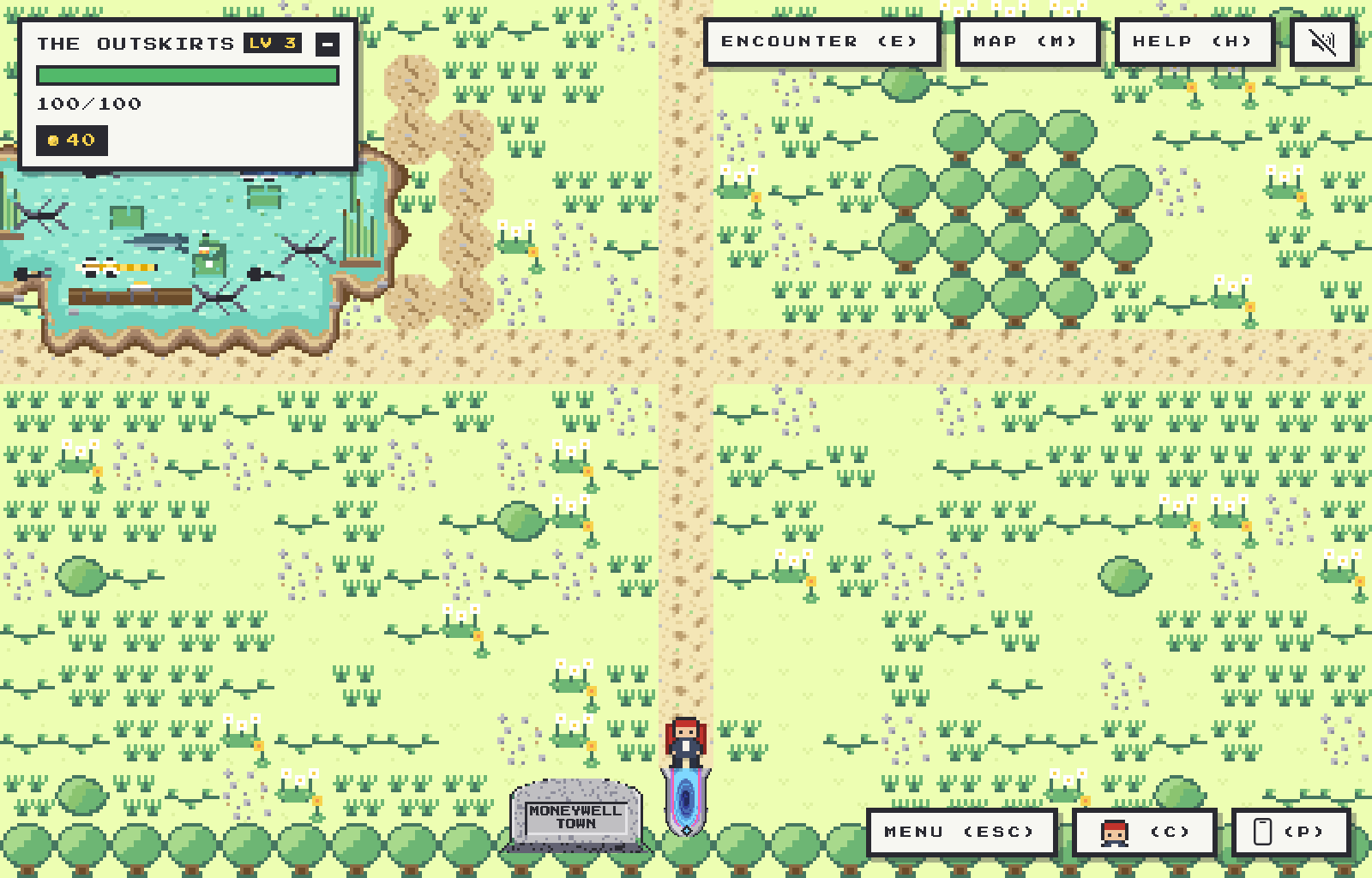
Head out to the outskirts, where creatures quiz you on what you learned. The four answer buttons are your moves. A right answer damages the creature. A wrong one damages you.
03 EXPLAIN
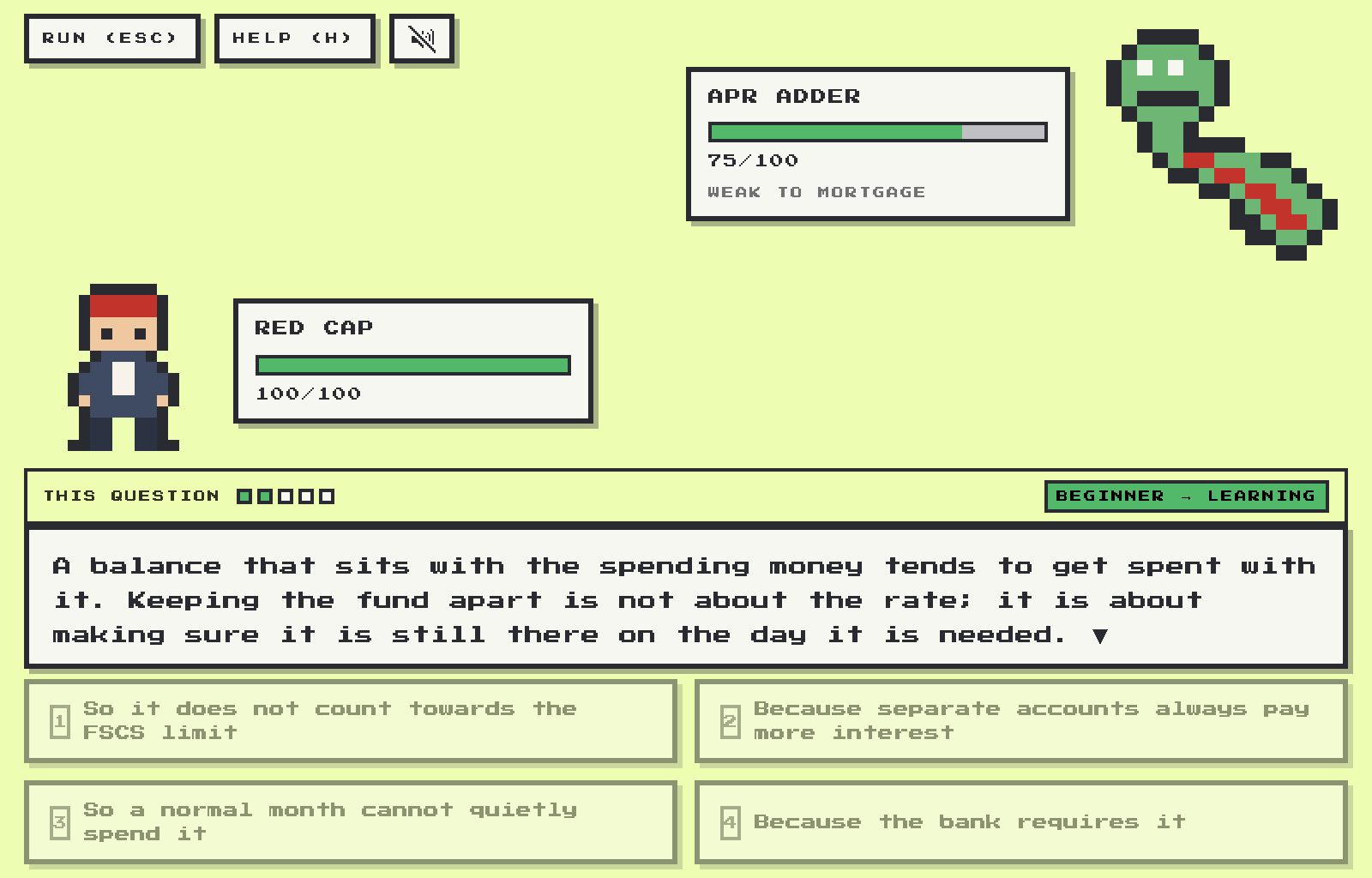
Every question carries an explanation, and the battle shows it whether you were right or wrong. Losing a battle never removes a topic you have already learned.
THE SCHEDULE
A COURSE IS SOMETHING YOU FINISH. A GAME IS SOMETHING YOU COME BACK TO.
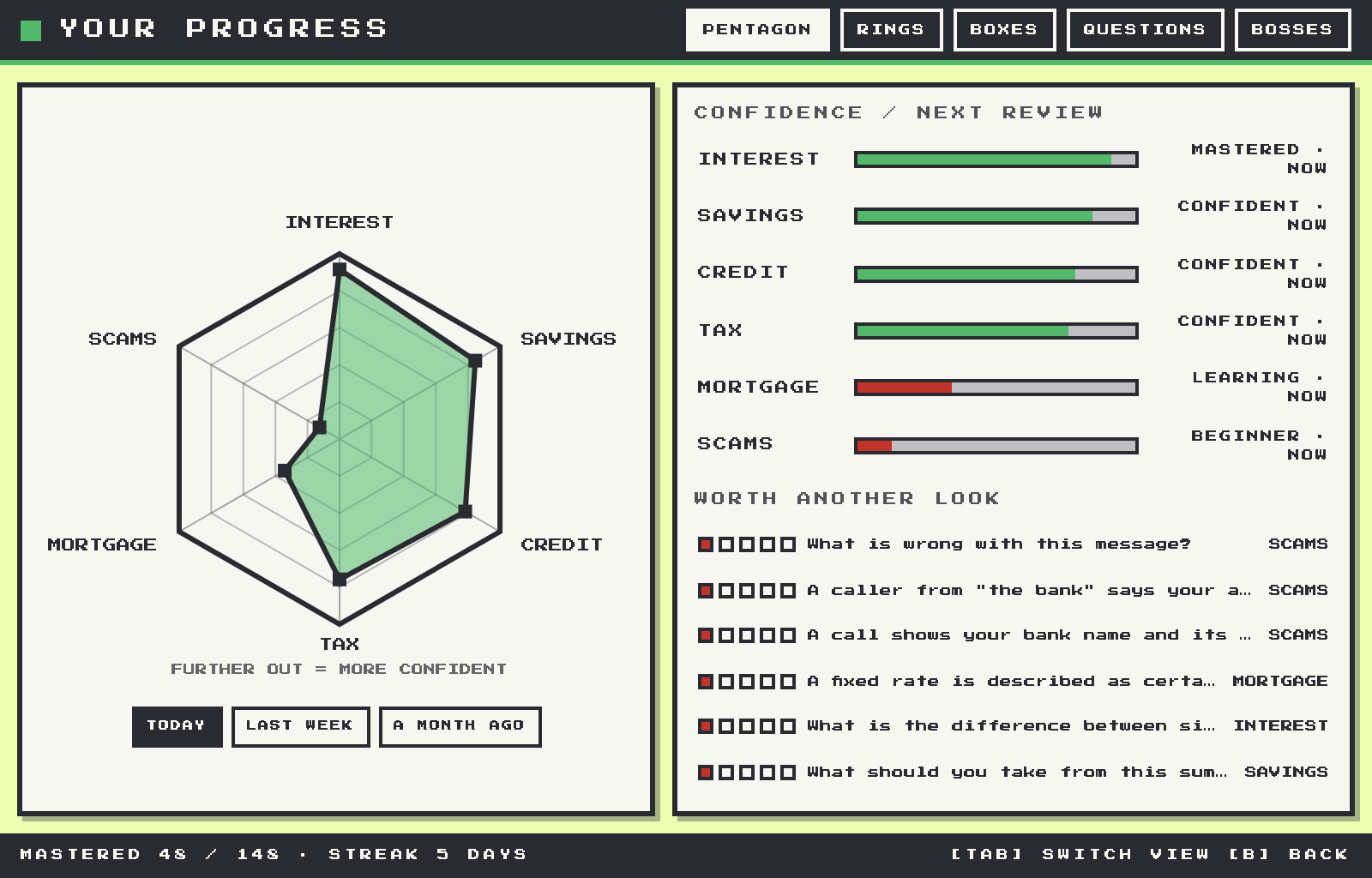
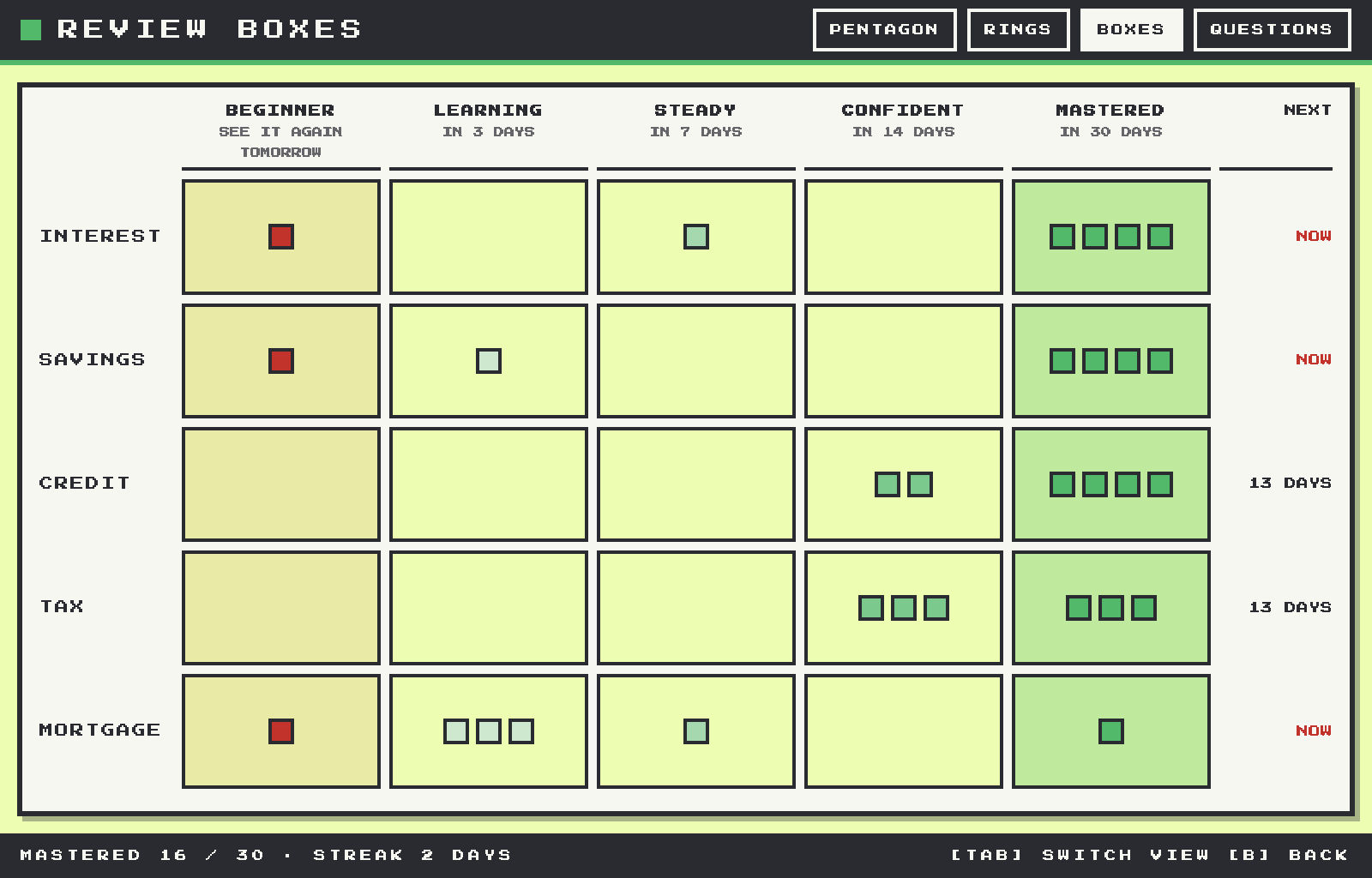
A tenancy deposit question matters eighteen months after the lesson, not the same week. Every answer moves that question through five boxes on widening intervals, so the facts come back before they fade.
1
DAY
BEGINNER
3
DAYS
LEARNING
7
DAYS
STEADY
14
DAYS
CONFIDENT
30
DAYS
MASTERED
SLIP UP WITHOUT LOSING GROUND
A wrong answer drops a question one box rather than resetting it, so one slip does not undo weeks of work. Your grasp of a topic is never reduced to a percentage or a mark out of ten — only to a confidence tier. A score is what turns learning into anxiety.
SPACED RETRIEVAL BEATS MASSED RETRIEVAL, g = 0.74 ACROSS 29 STUDIES — LATIMIER ET AL., EDUCATIONAL PSYCHOLOGY REVIEW, 2020SPACED RETRIEVAL BEATS MASSED RETRIEVAL, g = 0.74 ACROSS 29 STUDIES — LATIMIER ET AL., 2020
SKIPPER
ASK SKIPPER. HE KNOWS EVERY LESSON AND NEVER NAMES A PRODUCT.
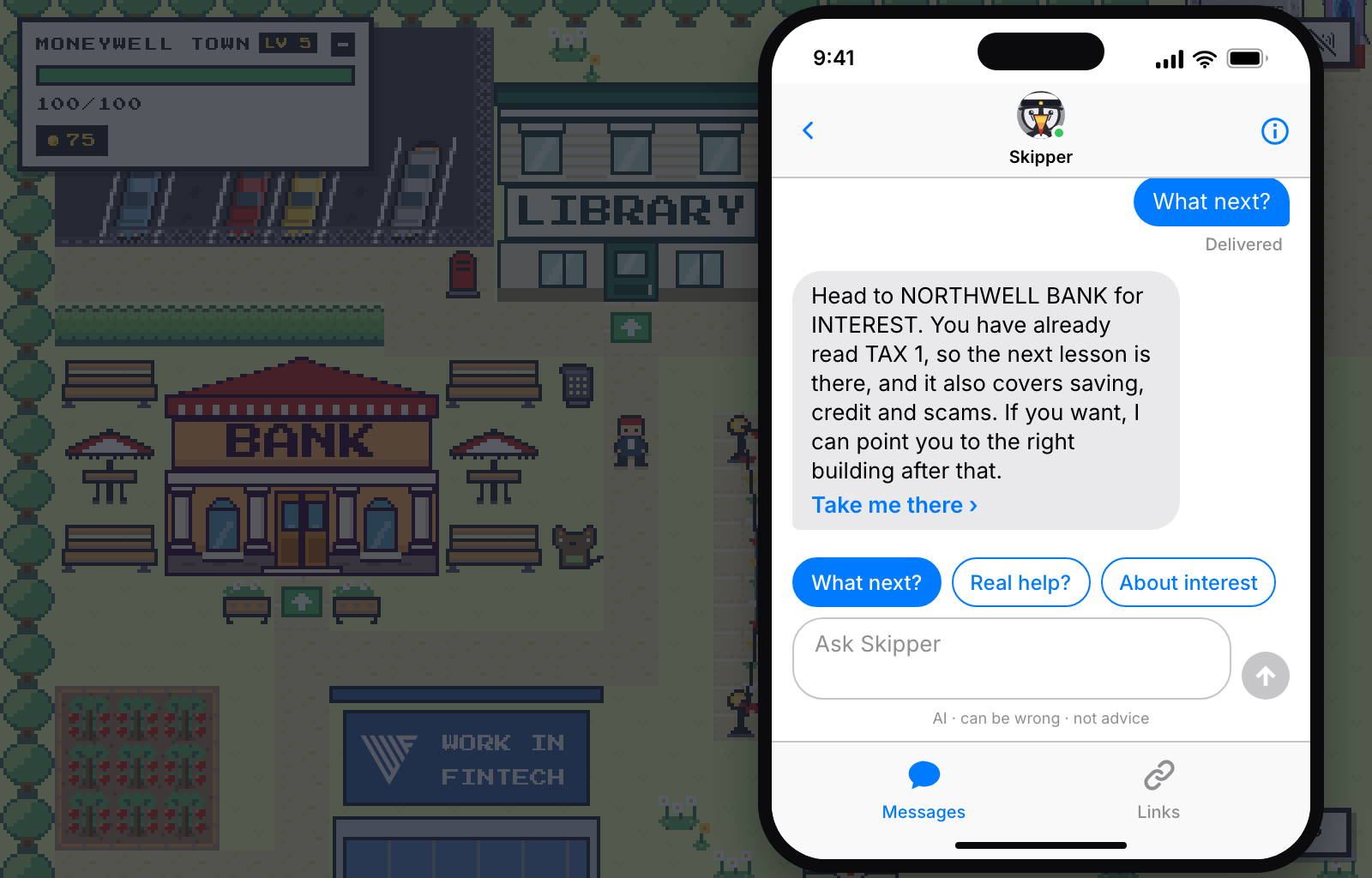
Press P and the phone opens on Skipper, a puffin in a captain's cap. His instructions are built from every lesson page, the LINKS list and the in-game help, so whatever the town can teach, he knows. Ask what to do next and he names the building; a TAKE ME THERE button walks you to its door.
Skipper runs on Anthropic's Claude. Online replies go through a small relay to Claude's API. Recent messages and a summary of game progress leave your device. The game has no chat database, but the provider may retain messages. Reloading clears the thread on your device. If the relay is unreachable he answers from a script, and the phone says so. His second app is LINKS: twenty real UK places for help, nineteen with a checked address, and the only list he is allowed to quote from.
 SKIPPER
GUIDED PREVIEW · SAMPLE PROMPTS
What next?
Head to NORTHWELL BANK for INTEREST. You’ve read TAX 1 already, so the next clear step is the interest lesson there. If you want, I can also point you to the bank for savings, credit or scams later on.
IN GAME: TAKE ME THERE >
WHAT SKIPPER WILL NOT DO
NAME A PRODUCT
Not a provider, an app, a bank or a comparison site. He points at the lesson, and at free UK help.
WRITE OUT AN ANSWER
Quiz questions are left out of his instructions on purpose. He names the building that teaches it instead.
SEND YOUR DETAILS
Card numbers, sort codes, emails and National Insurance numbers are screened out before a message leaves the browser. Checks can miss things, so never share them.
ANSWER A CRISIS
Words that sound like one get a fixed signpost to Childline, Samaritans and StepChange, never a model.
PRETEND TO BE SURE
The phone says on screen that he is an AI and can be wrong, and that nothing here is advice.
COMPARISON
WHAT OTHERS ARE SELLING YOU ALONGSIDE THE LESSON
| FREE TO THE PLAYER | NO ACCOUNT NEEDED | SCHEDULES A SECOND LOOK | NOT SELLING A PRODUCT | |
|---|---|---|---|---|
| MONEYWELL TOWN | YES | YES | YES | YES |
| GOHENRYPrepaid card, parent subscription | NO | NO | NO | NO |
| BLACKBULLIONUniversities buy it for students | YES | NO | NO | YES |
| ZOGOCo-branded inside a bank's app | YES | NO | NO | NO |
| REVOLUT <18Teen account, parent must hold one | YES | NO | NO | NO |
| MONEYHELPERGovernment backed reference guidance | YES | YES | NO | YES |
MONEYWELL TOWN
Free to the player
No account needed
Schedules a second look at every fact
Not selling a product
GOHENRY
A prepaid card on a parent subscription. The lessons are an attachment, and it ends at 18, right where the highest-stakes decisions start.
BLACKBULLION
Free to students, but only if your university bought it. Courses and modules, so coming back is on you.
ZOGO
Points redeemable for real rewards, co-branded inside a bank's own app. The rewards drive the loop, and the lesson sits on the balance sheet of the firm selling the product.
REVOLUT <18
In-app learning built on a real teen account, which the parent has to hold. Education as retention marketing.
MONEYHELPER
Free, impartial and government backed. Also reference material you visit once you already know you have a problem. Moneywell Town points at it rather than competing with it.
Moneywell Town points at MoneyHelper rather than competing with it. The library hands out MoneyHelper, Citizens Advice, StepChange and MoneySavingExpert by name, and says out loud which of them is commercial.
WHO PAYS
PLAYERS NEVER PAY.
Banks will fund it. We're talking to our first funders now.
Under the FCA's Consumer Duty, banks have to show they are helping customers understand the products they hold. Funding impartial education for 15 to 18 year olds is one of the few ways to do that which is not marketing.
What a funder gets is a building in town with its name on the door that teaches and sells nothing. WORKINFINTECH shows what one looks like. It is an example from the hackathon where the game was built: Work in Fintech does not fund the game. What a funder does not get is player data. There are no accounts and nothing is passed to any funder. Progress stays in the browser, apart from a short game summary sent with a Skipper question, and analytics only runs if a player opts in.
THE RULES WE DON'T BREAK
Inform, educate, simulate and signpost.
Never recommend a product.
Never state what someone should do with their own money.
Prefer concepts to figures, because thresholds and headline rates date within a year.
No hype, no leverage. Build investors, not gamblers.
THE TOWN
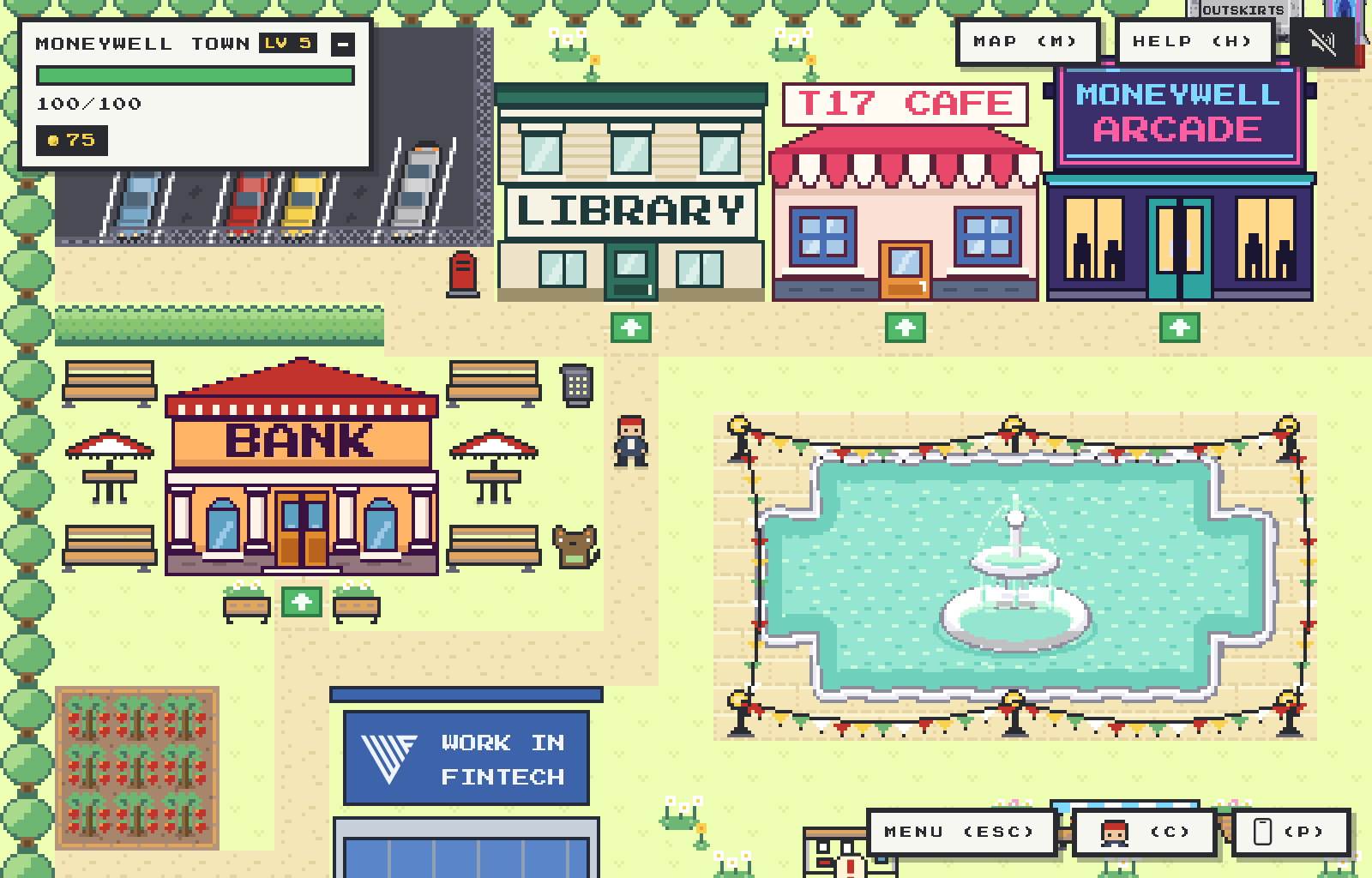
SEVEN BUILDINGS, SIX CREATURES, ONE SCHEDULE

QUESTIONS
WHAT PEOPLE ASK FIRST
WHAT IS MONEYWELL TOWN?
A small browser game. You learn a money topic from someone in a town building, then walk into the outskirts where creatures quiz you on it. Right answers damage the creature, wrong ones damage you, and you get the explanation either way.
WHO IS IT FOR?
It is built for 15 to 18 year olds, and anyone 15 or over can play. That is the age when habits form before the stakes rise, just ahead of a first payslip, student debt and a credit file. The tone assumes nobody has been taught this before.
IS IT FREE?
Yes, and there is nothing to subscribe to and no real-money purchase anywhere in it. There are coins inside the game, earned by playing and spent at the cafe or set aside at the bank, and they are game currency with no cash value and no way to buy them with real money. The education is free by design, on the view that nobody should pay to learn how money works.
DO YOU GIVE FINANCIAL ADVICE?
No. Moneywell Town explains how things work and points you to free, impartial UK services such as MoneyHelper, Citizens Advice and StepChange. It never recommends a product and never tells you what to do with your own money.
DO I NEED AN ACCOUNT?
No. There is no sign up, no email address and no login. Your progress is saved in your own browser, which also means clearing your browser data clears it.
DOES IT CONNECT TO MY BANK?
No. It never connects to a bank, a card or any financial account. Nothing you do in the game touches real money.
WHAT HAPPENS WHEN I GET A QUESTION WRONG?
You take damage and you get the explanation. The question moves back one step in the review schedule rather than resetting, so one slip does not undo weeks of work, and it will come back sooner.
WHAT DOES IT COVER?
Six topics in a UK context: interest, saving, credit and debt, tax and PAYE, mortgages, and scams, meaning how one works, how to spot one and what to do after. Every lesson page is drawn as a diagram. It does not cover investing, pensions or crypto yet, and it deliberately avoids quoting thresholds and headline rates, which date within a year.
WHAT IS REAL AND WHAT IS MOCKED?
The payslip at the accountants carries example figures and says so at the top; the lines on it are real. The bank pays interest on coins by a game rule, and says on screen that a real account does not work that way. Coins are part of the game, not money. Skipper is a real AI, Anthropic’s Claude, answering live, and can be wrong.
MONEYWELL TOWN
Open it on a school laptop. No card, no email, no parent required. A lesson is a few illustrated pages and a battle is a handful of questions.Open it on a school laptop. No card, no email, no parent required. A lesson is a few illustrated pages and a battle is a handful of questions.
PLAY NOW